Saturday, 3 March 2012

Sunday, 5 February 2012
What's a Geek Urn?
Am currently enjoying Neal Stephenson's "Reamde". More of a techno-thriller (so far) than a Geek fest (see "Cryptonomicon", "Snow Crash", The Baroque Cycle, and best of all, "Anathem"), but a great read and certainly full of techno-fun. I'm only halfway through, deep in the depths of a scare-a-minute ride through China with hackers, Russian Mafia and Islamic terrorists. Typical of Stephenson, though, we have an undercurrent of a story that's actually happening in a virtual world (a close relative of World of Warcraft), and I have a suspicion that this won't be over till the Earthtone Coalition and the Forces of Brightness have sorted out their differences on-line. But maybe it's not about that at all.
There's the usual mix of savant characters - including Stephenson's trademark Geek Girl (who knows the system better than the guys and always gets her way - usually by knowing geeky stuff better than anybody else). All great fun. It has to be said, though - thus far, not quite as hugely satisfying as "Anathem" or the Baroque Cycle. Probably up there with "Cryptonomicon", though.
Full update when I've finished.
PS. In the weeks waiting for Christmas (and "Reamde" as a present) I re-read "Ilium" and "Olympos" by Dan Simmons. I cannot begin to tell you how enjoyable these are. Greek Gods who are really scientifically enhanced humans. The real siege of Troy, with Hector, Paris, Agamemnon and Odysseus - as described by Homer, but with a techno twist. Achilles in Tartarus. Terra-formed Mars. Little cyborgs from the moons of Jupiter that really love Shakespeare and Proust.
My favourite line is a slight spoiler, but it's the first sentence from the second book (Olympos) and is just wonderful -
"Helen of Troy awakes just before dawn to the sound of air raid sirens."
Love it, love it, love it. I cannot recommend these books highly enough. Read them, and enjoy.
Tuesday, 6 December 2011
Comics take sides on "Occupy"
I have read and hugely enjoyed comics by both Alan Moore (eg. "Watchmen", "From Hell", "The League of Extraordinary Gentlemen") and Frank Miller (eg. "Daredevil", "Elektra", "Batman: The Dark Knight Returns", "Batman: Year One"),


though admittedly nothing very recent in Miller's case. They were both giants in the movement that took comics from throwaway pulp to serious art in the 80s and 90s. Does that give them licence to comment on politics and public demonstrations?
Funnily enough, I think maybe it does.
Both of them have based a great deal of their art on descriptions, criticisms and commentaries on (mostly allegorical) political and social situations (most obviously in Moore's "V for Vendetta").
Here's what Alan Moore has had to say in a Guardian Books article about Frank Miller's recent, pretty strong, criticism of the "occupy" movement. I have to say, I'm totally with Moore on this - but maybe Miller's recent positions are are a bit too Fox-News-like for European consumption. Perhaps I'm just betraying my pinko European prejudices.
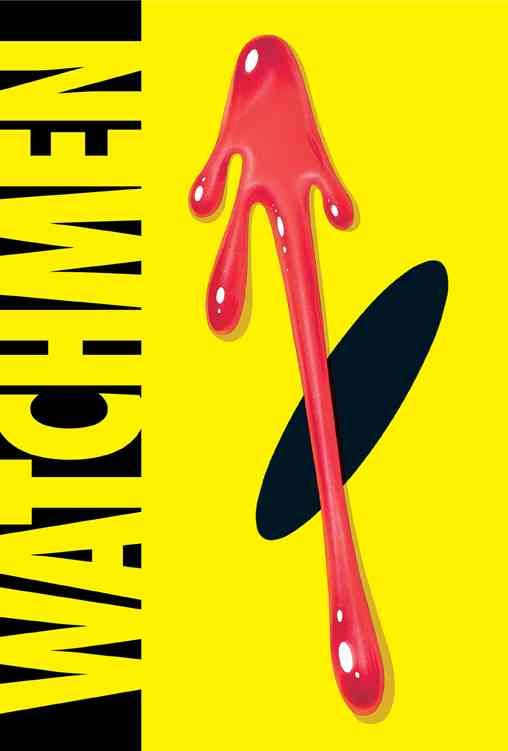


though admittedly nothing very recent in Miller's case. They were both giants in the movement that took comics from throwaway pulp to serious art in the 80s and 90s. Does that give them licence to comment on politics and public demonstrations?



Funnily enough, I think maybe it does.
Both of them have based a great deal of their art on descriptions, criticisms and commentaries on (mostly allegorical) political and social situations (most obviously in Moore's "V for Vendetta").
Here's what Alan Moore has had to say in a Guardian Books article about Frank Miller's recent, pretty strong, criticism of the "occupy" movement. I have to say, I'm totally with Moore on this - but maybe Miller's recent positions are are a bit too Fox-News-like for European consumption. Perhaps I'm just betraying my pinko European prejudices.
Saturday, 26 November 2011
Lost in the Cloud
My blog updating has been woeful of late. And I put the blame firmly at the door of OnLive cloud gaming! Instead of sharing my half-thought-through opinions on my blog, I've had my spare time sucked into Batman: Arkham Asylum...
Now, to be fair, I have been a more than willing accomplice in my own downfall. There are two factors. Firstly, Arkham Asylum is a mighty fine game for all sorts of reasons (with more than a nod to Grant Morrison's excellent graphic novel). Secondly, I am well impressed by cloud gaming as a concept and a service.
It has always been a problem with PC gaming that the games don't work on every PC. In fact, unless you have an unlimited hardware budget, or are an Alienware fanboy, the latest game, the one you really fancy, has no chance of running on your PC. So, you can fork out a couple of hundred on a new graphics card (and still find it doesn't work), or do the sensible thing and buy an Xbox 360. ...Until now. With OnLive, the game is a PC game, but you can play it on your PC (or MAC, or - they reckon, sometime soon - an iPad or Android device!). Your PC needs a reasonably tasty Internet connection, but that's it. The game runs on a machine on the cloud. OnLive get to worry about whether their graphics cards are good enough, or their processors, or RAM. It's not my problem. OnLive install the game and make sure it works - all I do is log in and play. Sweet! They also sell a "console", which amounts to a small box that plugs into your TV and does nothing but connect to the OnLive service and let you play the games. It's a lot cheaper than an Xbox or PS3, since it doesn't consist of much (no disks, no fancy graphics chips).
This really looks like the future of gaming to me. Not necessarily OnLive itself, but it's only a matter of time till MicroSoft and others (Sony? Apple? Disney? Sky?) start selling games primarily in this format. No distribution worries. No console ports. Bug fixes and revisions applied at the server end as often as the provider likes. The limitation is purely the availability of decent broadband - surely something that is going to get better and better anyway, regardless of anything else.
So there you are. I am predicting the end of the games console. Not now. Not next year - but it's coming, and we can already see what it looks like.You read it here first!
Now - it has to be said that I have been a willing accomplice in my own downfall. Not only is Arkham Asylum a fine game, but I am totally impressed by the concept and service of OnLive. The problem with PC games over the years (as opposed to the console versions), is that not all PCs will play all games. In fact, it's a reasonable rule of thumb that unless you are an Alienware fanboy with unlimited funds,
Now, to be fair, I have been a more than willing accomplice in my own downfall. There are two factors. Firstly, Arkham Asylum is a mighty fine game for all sorts of reasons (with more than a nod to Grant Morrison's excellent graphic novel). Secondly, I am well impressed by cloud gaming as a concept and a service.
It has always been a problem with PC gaming that the games don't work on every PC. In fact, unless you have an unlimited hardware budget, or are an Alienware fanboy, the latest game, the one you really fancy, has no chance of running on your PC. So, you can fork out a couple of hundred on a new graphics card (and still find it doesn't work), or do the sensible thing and buy an Xbox 360. ...Until now. With OnLive, the game is a PC game, but you can play it on your PC (or MAC, or - they reckon, sometime soon - an iPad or Android device!). Your PC needs a reasonably tasty Internet connection, but that's it. The game runs on a machine on the cloud. OnLive get to worry about whether their graphics cards are good enough, or their processors, or RAM. It's not my problem. OnLive install the game and make sure it works - all I do is log in and play. Sweet! They also sell a "console", which amounts to a small box that plugs into your TV and does nothing but connect to the OnLive service and let you play the games. It's a lot cheaper than an Xbox or PS3, since it doesn't consist of much (no disks, no fancy graphics chips).
This really looks like the future of gaming to me. Not necessarily OnLive itself, but it's only a matter of time till MicroSoft and others (Sony? Apple? Disney? Sky?) start selling games primarily in this format. No distribution worries. No console ports. Bug fixes and revisions applied at the server end as often as the provider likes. The limitation is purely the availability of decent broadband - surely something that is going to get better and better anyway, regardless of anything else.
So there you are. I am predicting the end of the games console. Not now. Not next year - but it's coming, and we can already see what it looks like.You read it here first!
Now - it has to be said that I have been a willing accomplice in my own downfall. Not only is Arkham Asylum a fine game, but I am totally impressed by the concept and service of OnLive. The problem with PC games over the years (as opposed to the console versions), is that not all PCs will play all games. In fact, it's a reasonable rule of thumb that unless you are an Alienware fanboy with unlimited funds,
Sunday, 18 September 2011
It looks like science fiction...
...but it's way better than that. I particularly love the thunderstorms.
Watch "What does it feel like to fly over planet Earth?" on YouTube
Monday, 5 September 2011
I'm too easily excited...
A new "lifeless thing" came to my attention this week. A new novel from Neal Stephenson!
 Reamde
Now, I have not read this - I've not even seen a copy, so I can't, hand on heart, recommend it - but I can say that Neal's last four novels were absolutely magnificent (and his previous ones pretty fine too). They are, by and large, great monsters of books, and every page full of invention and fun. I don't re-read too many novels these days, but happily spent some weeks buried in The Baroque Cycle again last year. Isaac Newton jumping up, in a grotty tavern, in disguise, to apprehend a counterfeiter! What's not to love?
Scarily, the thing I probably like best about Anathem is that, even though it is a real feast for the brain, with plenty of genuinely interesting philosophy (natural and the other kind), and also a rip-roaring story line - It's the fact that it makes me feel pretty smart that really does it for me. Oh yes. If I'm getting all this, I must be a pretty clever guy. (I wonder if that was part of the attraction of Christopher Nolan's Inception; certainly lots of people said it was hard to follow, but they all managed it - perhaps it just seemed hard to follow).
Anyway - Reamde is right on the top of my Christmas list. Let's hope it's in paperback by then. I don't begrudge paying the hardback price, but I read my books on the train, and the Anathem hardback was a full weight training exercise on its own, when I carried it in my laptop bag to work every day.

Now, I have not read this - I've not even seen a copy, so I can't, hand on heart, recommend it - but I can say that Neal's last four novels were absolutely magnificent (and his previous ones pretty fine too). They are, by and large, great monsters of books, and every page full of invention and fun. I don't re-read too many novels these days, but happily spent some weeks buried in The Baroque Cycle again last year. Isaac Newton jumping up, in a grotty tavern, in disguise, to apprehend a counterfeiter! What's not to love?
Scarily, the thing I probably like best about Anathem is that, even though it is a real feast for the brain, with plenty of genuinely interesting philosophy (natural and the other kind), and also a rip-roaring story line - It's the fact that it makes me feel pretty smart that really does it for me. Oh yes. If I'm getting all this, I must be a pretty clever guy. (I wonder if that was part of the attraction of Christopher Nolan's Inception; certainly lots of people said it was hard to follow, but they all managed it - perhaps it just seemed hard to follow).
Anyway - Reamde is right on the top of my Christmas list. Let's hope it's in paperback by then. I don't begrudge paying the hardback price, but I read my books on the train, and the Anathem hardback was a full weight training exercise on its own, when I carried it in my laptop bag to work every day.
Tuesday, 9 August 2011
Holiday Reading
Amongst this week's holiday reading, I packed a copy of The Museum of Innocence by Orhan Pamuk. I thought I should include at least one Turkish novel to to with my location. I had previously enjoyed "My Name is Red" by the same author (a clever murder mystery in which one of the narrators is the killer...without giving away his identity).
The Museum of Innocence is very different. I won't go into details or launch into a critique, there are plenty of those already available on the web, and I'm typing this on an Android touch screen by a very sunny swimming pool. I know. I suffer for my art. However, I was very taken with one particular chapter of this very fine novel.
To set the scene, our main character is a wealthy man who is completely obsessed with a girl with whom he had a brief affair. Through various twists and turns, and largely because of Turkish moral attitudes in the 1970s, he finds that the only way to even partially satisfy his obsession is to spend evenings with her family (with the girl, her parents, her new husband and a canary called Lemon). Our man spends literally thousands of evenings like this over many years (he counts them all).
Amidst this lengthy section of the book is a chapter entitled "Sometimes". The chapter is several pages long and consists entirely of short sentences beginning with the word "sometimes". It reads like a poem to banality. It lists, in no particular order, hundreds of incidents that may have occurred over the course of simple family evenings in front of a single-channel TV set. Of meals eaten, cigarettes smoked, comments made - and nestled among them all, tiny nuggets of joy or despair when the girl he loves lets slip something that might give or take his hope.
I'm still thinking about it now, days after reading it. I guess it may be better or worse on the original Turkish, but it's pretty affecting in translation.
Incidentally, since reading this novel I am now partaking of the occasional Raki. Well, I am on holiday.
Subscribe to:
Posts (Atom)