Friday, 10 May 2013

It's not just me, then

Nazi-themed Wagner opera pulled after walkouts


Following my recent criticism of the Royal Opera House holocaust themed "Nabucco",  here's one even worse.

I have a great deal of time for Wagner, and it is certainly possible to make a good argument that his anti-Semitic leanings are worthy of being addressed in productions. But "Tannhauser"  has nothing to say that could be appropriate for such explicit reference to the Holocaust. In fact, it's the story of a young man seeking redemption following some ill-advised bonking. This is just the wrong place for such allusions.

I have clearly not seen the production, so my criticism here is based on my knowledge of "Tannhauser" itself and on just how uncomfortable it felt watching a much milder Holocaust allegory in the recent "Nabucco".
I don't know if I am ready for the Holocaust as entertainment. It seems I'm not the only one. Maybe we need to wait another generation for that.

Thursday, 2 May 2013

Nabucco. Is it Lear? Is it the Holocaust? Is it actually any good?


Living in lower Chepstow is really pretty special. As well as having beautiful old houses, a museum, pubs and an eleventh century castle in my street, there is, just round the corner, The Drill Hall.


All sorts of events take place there, for all tastes and interests - most organised and run by local people. This Monday (29th April 2013) was a first for The Drill Hall and for me - "live" opera relayed from the Royal Opera House. This is exactly the same feed that is shown at major cinemas across the country, and a real treat to have available just a few minutes walk from home (especially if you fancy a glass or two of wine while enjoying the performance). Many thanks are due to Ned Heywood and others for making this possible.

Readers of this blog will know I already have a bit of a liking for opera - particularly Wagner, but I'm prepared to give Joe Green a bit of a go. So I was excited to see that the Drill Hall's inaugural opera screening would be Verdi's Nabucco.


I know my way round Wagner pretty well, but my Verdi knowledge is far more limited. My expectations were therefore built around somewhat vague primary school memories of the biblical story of Nebuchadnezzar (the writing is on the wall!), and Verdi's rather wonderful chorus of The Hebrew Slaves, "Va, Pensiero", which apparently became a sort of unofficial anthem for Italian independence in the 19th century. You can hear why; it's stirring stuff. 


In many ways Nabucco turned out to be something of a surprise. I think it could be useful to split this review into three parts. 

Opera relay at Chepstow Drill Hall 

First things first. The Drill Hall was pretty full for this event. The screening and sound quality were excellent. Refreshments inexpensive (and, as mentioned previously, included some rather pleasant red wine) . All in all, a bit of a triumph for Ned and the team. 

The Royal Opera production 

There was a great deal to enjoy in the individual performances. The eponymous role was taken by opera legend Placido Domingo who, at 72, has dropped down from tenor to baritone. (I guess a bit like a centre forward moving to centre half later in his career).


I'm absolutely no expert on the technical details of singing, but Domingo's baritone sounded fine to me and, perhaps more impressively, his commitment to the drama of the part showed a master at work. Really some powerful acting, which is all too often rare in opera. 

The other main part, of Nabucco's eldest daughter Abigaille, was sung by Liudmyla Monastyrska.


I've not heard Monastyrska's work before, but I will certainly be looking out for her in future. Powerful singing, full of fireworks and with drama and character in spades. Highly impressive. I've been listening to another recording of Nabucco on Spotify all week, and the vocals are a pale shadow in comparison to  Monastyrska's.

I must also mention the Royal Opera Chorus, who had plenty to contribute throughout this piece, and brought many of the most affecting moments to life.

Sadly, Daniele Abbado's production is a bit of a weak point. The Hebrew slaves suffer their oppression and threatened executions dressed in 1940s clothing.


On the face of it, the parallel with the holocaust is obvious, and not necessarily a bad one to draw. However, it somehow doesn't fit with the mood of the piece. Verdi's music is stirring, and really quite emotional in places, but it doesn't seem anywhere near dark enough for the holocaust comparison. In fact it's a bit martial and even comes across as jolly in places (to my ear). Like a marching band on a sunny day. It could be argued that Verdi has got that wrong (see below), but in any case, it sits really uncomfortably with holocaust imagery. A particularly unpleasant moment was where some of the Hebrew women were made to strip down to their 1940s undergarments in anticipation of (presumably) execution. I got the point, but it didn't seem like this was the right place to draw that comparison. The Biblical war, slavery and exile associated with the Assyrian sack of Jerusalem may well have been a horror of holocaust proportions - but Verdi simply doesn't go there with his music, and it seems almost exploitative for Abbado to drag us to that comparison in his stead.

Incidentally - it really doesn't help the clarity of the story that the Babylonian soldiers are the same chorus dressed in the same 1940s clothes - right down to wearing a kippah in some cases; so for all the world the guards also appeared to be Hebrew. Maybe Abbado is suggesting that in war all sides are equally to blame. Or something. In this context, it was just confusing.

It seems to be acceptable in opera to completely give the game away before the event. If you don't like spoilers, these Royal Opera House productions are not for you. Before each section the presenter gave a synopsis of the coming act, right up to and including any "surprise" dénouement. The half time interval also included a rather interesting and informative documentary on the Royal Opera Chorus - but this included some clips from the acts we had not yet seen. I found all this "spoiling" to be rather irritating, but maybe it's necessary - more on that in the final review section (Verdi's opera itself).

Verdi's "Nabucco"

The ROH presenter informed us that "Nabucco" was Verdi's "first masterpiece", written following two failed works and when Verdi was on the verge of giving up opera composition as a bad job. He pointed out the revolutionary use of the chorus (all singing the same thing, albeit in complex harmonies, but making the words very clear to the audience). This was apparently a significant break from the bel canto style, where the focus is on beautiful, complex singing, into something far more dramatic. Well - maybe there we have our starting point.

Some of Verdi's music in this piece is exceptional. I may have arguments about whether the mood is correct, but particularly the choruses and some of the ensemble pieces are hugely enjoyable. I notice that Verdi has written the plight of the Hebrews musically, not in terms of their oppression, slavery or peril, but instead as a powerful longing for their homeland. On that level, it's very different from the way a 20th or 21st century audience might see it - but it clearly struck a chord with the people of Italy at the time of it's original performances.

My problem is that music-drama (to use  the Wagnerian term) or Dramma lirico, as this was billed, surely must also work as a drama. The overall story arc of Nabucco certainly has plenty of scope for such drama. Where this fails is that the libretto seems hopelessly disjointed and incomplete. It genuinely feels like one of those much-disputed Hollywood movies where the studio has snatched it out of the director's hands and cut out an hour (at random) to make it the right length, with no consideration as to whether it makes any sense.

I think we're seeing several things here.

Firstly, I'm used to Wagner's works, where the piece goes on for as long as it takes to cover all necessary exposition and explain each participants motivations and any changes of motivation. (In fact, many would say that Wagner's operas go on for much too long doing this kind of thing). I would also add that my previous encounters with Verdi's later work (eg. La Traviata, Aida) have not suffered from this problem, and their drama flows along in a manner that makes sense. Maybe I've been spoiled, and expect far too much drama from my operas. After all, the previously mentioned bel canto style was all about nice music and the story took very much a back seat. Verdi's original audience for Nabucco may well have loved the exceptional music, and been bowled over by what drama there is, with no expectation of being able to make much sense of the story itself.

Which brings me to the second thing. If opera audiences (apart from me) don't particularly expect to be able to follow the story just by watching the performance, maybe that explains why everybody seems happy with the presenter (or the published programme) telling exactly what is about to happen in each upcoming act. If you did this is in the cinema, or in the Radio Times, before almost any non-operatic drama, there would be uproar.

But moving on to the story/drama itself - where is Verdi going with this one? Or maybe I should be laying the blame at the door of the librettist, Temistocle Solera.

To avoid commiting  the same error I've complained about elsewhere, you should note that the following contains spoilers.

The story concerns the Babylonian sack of Jerusalem, with Solomon's temple being destroyed and the Hebrews taken into slavery and exile. However, this is in some ways a backdrop in Nabucco to the conflict between the king himself and his daughters. The youngest daughter Fenena has taken up with the Hebrews, while his eldest daughter Abigaille seeks to take the throne of Babylon for herself. As the conflict with the daughters heats up, and Nabucco himself descends into madness (following some divine retribution from the god of the Jews), there are very powerful echoes of King Lear, and it's none the worse for that. In this particular production, these scenes are absolutely electric between Monastyrska's Abigaille and Domingo's Nabucco.

So far so good. There's a lot of to-ing and fro-ing early on with the Hebrews apparently holding Fenena hostage, then Fenena defending them from her sister and her Father. At the end of the second act (I know because the presenter told me so) Nabucco is struck down by God for claiming to be a god himself. This is when his descent into madness starts. To be fair, apart from being a bit unsteady on his feet, there wasn't a lot of evidence of madness.

We then have a mystifying development where Abigialle appears waving a piece of paper which proves that she's the daughter of slaves and not Nabucco's daughter at all. As far as I could tell, there was no explanation of how Nabucco came to believe that she was his eldest daughter. She has also usurped the throne at this point, I think. It's not that easy to tell. Later, in order to save Fenena from being executed, Nabucco prays to the god of the Jews, and his madness is cured. We know this because he keeps telling us his mind is clear now. Suddenly, with no clear explanation, he's back in charge of Babylon, and has decided to be nice to the Hebrews (in some non-specific manner). Out of the blue, Abigaille appears, all sad and repentant. How we got from Nabucco's conversion/cure to Abigaille's current state, we are never told. In fact Abigaille is so repentant that she has poisoned herself and is dying. I know this because the presenter told me so. It's really not particularly clear. We get some brilliant singing from Abigaille and Nabucco as she dies, and then, just as her clogs pop and the curtain begins to fall, the Hebrew prophet chucks in an apparent throwaway remark that Nabucco, having changed sides, will now be king of kings. I kid you not. It actually sounds even less appropriate when it's sung - but here's the offending end of the entire libretto -


ABIGAIL
Let me not be damned!
She collapses and dies.

HEBREWS
She is dead!

ZACCARIA
to Nabucco
Servant of Jehovah,
you shall be king of kings.


If you or I handed that into our creative writing teacher, we'd be told in no uncertain terms to try again.

Don't get me wrong. There's a lot to enjoy about Nabucco. I've been listening to the music all week since Monday's show, and enjoying it immensely the more I hear. But it's not a great music drama, and it's certainly not an appropriate allegory for the 20th century Holocaust.


Sunday, 9 December 2012

Sir Patrick Moore. 


I was slightly surprised this evening, following the passing of Patrick Moore, to see some fairly negative assessments of the man and his work. Understandably, there's been a bit of mixed reaction, mainly due to the man's quirky (if not downright unpleasant) politics. But let's not lose sight of his immeasurable contribution to the creation of new British Scientists over many decades. His appearances on the BBC moon landing coverage led me to read his books, and take up a lifelong love of astronomy in particular and science in general. 

...and I am not the only one.

He sometimes came across as a reactionary, misogynist little Englander of a type that is very thankfully a rarity these days. But to think of him as only that is to totally miss his main contribution to our culture. 

This man single-handedly inspired several generations of children to become astronomers and scientists. I remember, as a young boy, taking my first telescope out into the freezing Scottish winter night with a copy of his Observers Book of Astronomy which told me that I could see the moons of Jupiter (I could!), the rings of Saturn (there they were!) and that Polaris is in fact a binary star (and there it was!). He made the sky magic, and I took my own boys out on starry nights and showed them the planets and stars he showed me. 

A towering figure. 

We were lucky to have him.

Sunday, 22 July 2012

Marvel vs DC

Cards on the table. I'm a bit of a Marvel bloke. I bought into Stan's whole "Make Mine Marvel" ethos in the early seventies, and mainly for good reasons. Marvel comics had a complexity and (seems odd to think of it now) realism that DC didn't even attempt to emulate. Sure, in hindsight, those comics were crude and even a bit silly at times (The Yancy Street gang, I ask you!). But the characterisations and interweaving story lines were just the right recipe for the impressionable younger me.


In contrast, DC has some of the biggest superhero hitters, but they had a house style that seemed trivial and a little juvenile in comparisons to Marvel at the time. Some of that legacy is still there in DC mythology - the Riddler just so happens to be called E. Nigma, for instance, and much recent revisionism tries to make sense of this - but that was all par for the course in those days. (Yes, I'm well aware that Marvel had their fair share of silly names too).

Time moved on, and from the late seventies and into the eighties, DC adopted something much closer to the Marvel style, with increasingly sophisticated story lines. Some of the best work in mainstream comics has come from DC since then - Watchmen, Sandman, Hellblazer and The Dark Knight Returns, to mention just a few. And there's a telling point. Of those, only one featured an existing DC top property. With The Dark Knight Returns, Batman seems to have been the superhero big hitter most suitable for a dark, more realistic, more adult redevelopment.

Comics have moved a long way since then, in many ways. But the big business right now is the superhero movie. This year already the biggest movies have been The Avengers and The Amazing Spider-Man.

So, to get back to my point. I'm a Marvel bloke, deep down. I liked Spider-Man. Really good fun, well crafted, and even thought-provoking (especially if you, like I do, spend a lot of time working out how the story line does and will fit into the original Spider-man mythology and/or maybe the Ultimate universe mythology). Even better, I absolutely loved The Avengers. Spectacular. Fun. Surprisingly, not just bangs and crashes, but actually interesting too, at almost every turn. But maybe I would have always liked The Avengers. I was rooting for it before it began. By the way - I can't help but love that The Avengers' Nick Fury is played by Samuel L. Jackson - as not-so-subtly suggested by artist Bryan Hitch in Marvel's Avengers reboot, The Ultimates as far back as 2002


However, that's enough of that. I've just come back from watching The Dark Knight Rises, and it's head and shoulders above any of those. It covers every base. It's at turns, gritty, spectacular, thought-provoking, surprising (yes, there were things that I didn't see coming - when's the last time a Hollywood movie did that?), and even quite moving. If The Dark Knight was all about The Joker, and about challenging black and white morality with shades of grey, this new movie is about Bruce Wayne, and what drives him to fight on, even when there seems to be nothing to fight for. Even when it costs him everything. Even when it has maybe already cost him everything.


Christopher Nolan has done a great job with this franchise. Cleverly, Warner Brothers/DC have allowed him a great deal of control, and seem to have even allowed him to draw a line under a lucrative film series. I guess maybe they figure they can always reboot again another day, when the cash registers will roll again. To their credit, though - allowing Nolan to craft a coherent trilogy of thoughtful films for grown ups about a guy in a rubber mask...

I don't need to tell you any more. I'm still a Marvel guy deep down. I know if Galactus doesn't get us, Ultron will. Or Doom. Or Loki. But there will always be a quinjet there somewhere. It doesn't stop me thinking that the Batman movie was the best superhero film I've seen in some time. In fact, it's a good movie full stop.

Sunday, 3 June 2012

höchste Lust!

A quick note, and a recommendation. I saw Welsh National Opera's Tristan und Isolde at the Wales Millennium Centre last night. Absolutely awesome. I think there's only one more performance, which I believe is in Birmingham on June 16. If you get a chance, go.


"Tristan" is a work I was very familiar with in my misspent youth, experienced, libretto in hand, mainly listening to Solti's Decca recording on 5 LPs, with Birgit Nilsson.


Oh the magic of those old boxed sets! I've just pulled it out of my record collection for the first time in many years (to take this photo), and I can tell you right now, if I had a working record deck, that would be me for the rest of the day.

As a result, most of my previous experience of Wagner, and Tristan in particular, is in sound only. The "pictures" were all in my head. I have to say, there were a few times in last night's performance, where I closed my eyes and just soaked up the music. This was particularly so in the three overtures, which were rich and moving - and the tone from the orchestra pit gave a dimension to the music missing from my old black vinyl and the Spotify version I've been using to re-familiarise myself with the work. Sometimes the presence of the audience was a bit of an intrusion on a very personal experience. Of course, once the actors were on stage, there was plenty to see, and the modern use of surtitles means that I can now follow the details of the libretto every bit as well in the theatre as I used to when listening at home. Wagner really needs that detail. There are few, if any, show-piece arias and no Italian-style sing-along numbers. This is all about the drama, and it is all done in music at every step of the way. If you don't know what they are singing about at any given point, it's actually extremely difficult to appreciate either the music or the drama.

Now; an essential skill for the opera aficionado is the ability to suspend disbelief. After all, life isn't generally sung! But there's even more suspending to do when the heroic tenor medieval knight turns out to have had far too many super-size meals from McD's. My apologies to any comfortably-built tenors who may read this, but I just can't picture you taking on the warrior hero of Ireland and giving him a drubbing in hand to hand combat! However, close your eyes, and the voice is simply wonderful. Ben Heppner (Tristan) really came into his own in the third act, when his wounded hero gets the chance to sing his love and agony away from the vocal shadow of Isolde.

In many ways, it's all easier when listening to records and matching the real (and amazing) voice to an imagined hero. However, the bottom line is the music, and Wagner totally nails it here. If you are not familiar with Wagner, this is not a great place to start. You really need to have spent some time getting your head round his way of working and expressing emotion and drama. I can see how inaccessible it must sometimes appear - but how it is worth it! Once you've worked your way into the Wagner mindset, it becomes a magical, transporting place. The music sucks you into the drama and the inner emotional lives of the protagonists. In the dénouement of the WNO production, as she sings her epic final piece, Isolde removes her black cloak to reveal a white gown; the dress for her wedding to Tristan. Ultimately, we are left with nothing but the internal emotions of Isolde - everything else has fallen to nothing. In many productions, Isolde finishes by collapsing dead on Tristan's body. The WNO production instead achieves more by gradually dimming all light on the stage to leave finally nothing but Isolde's face illuminated. So absorbing was Anne Petersen's Liebestod that it was a while before I even noticed that everything else had disappeared. In the drama, Isolde is singing her own death - but her song is desperate and blissful. It is entirely appropriate that the audience is effectively drawn into Isolde's personal, isolated inner world, to the exclusion of all else. That is the real end of the drama - and it's utterly wrenching. Of course I cried like a big baby. I knew I would, but it speaks volumes for this performance that it hit me so hard. I even had another blub when Anne Petersen came out for applause at the end.

Draining. Wonderful. If I could go to this again today, I would.

Sunday, 5 February 2012

What's a Geek Urn?


Am currently enjoying Neal Stephenson's "Reamde". More of a techno-thriller (so far) than a Geek fest (see "Cryptonomicon", "Snow Crash", The Baroque Cycle, and best of all, "Anathem"), but a great read and certainly full of techno-fun. I'm only halfway through, deep in the depths of a scare-a-minute ride through China with hackers, Russian Mafia and Islamic terrorists. Typical of Stephenson, though, we have an undercurrent of a story that's actually happening in a virtual world (a close relative of World of Warcraft), and I have a suspicion that this won't be over till the Earthtone Coalition and the Forces of Brightness have sorted out their differences on-line. But maybe it's not about that at all.

There's the usual mix of savant characters - including Stephenson's trademark Geek Girl (who knows the system better than the guys and always gets her way - usually by knowing geeky stuff better than anybody else). All great fun. It has to be said, though - thus far, not quite as hugely satisfying as "Anathem" or the Baroque Cycle. Probably up there with "Cryptonomicon", though.

Full update when I've finished.

PS. In the weeks waiting for Christmas (and "Reamde" as a present) I re-read "Ilium" and "Olympos" by Dan Simmons. I cannot begin to tell you how enjoyable these are. Greek Gods who are really scientifically enhanced humans. The real siege of Troy, with Hector, Paris, Agamemnon and Odysseus - as described by Homer, but with a techno twist. Achilles in Tartarus. Terra-formed Mars. Little cyborgs from the moons of Jupiter that really love Shakespeare and Proust.

My favourite line is a slight spoiler, but it's the first sentence from the second book (Olympos) and is just wonderful -


"Helen of Troy awakes just before dawn to the sound of air raid sirens."

Love it, love it, love it. I cannot recommend these books highly enough. Read them, and enjoy.

Tuesday, 6 December 2011

Comics take sides on "Occupy"

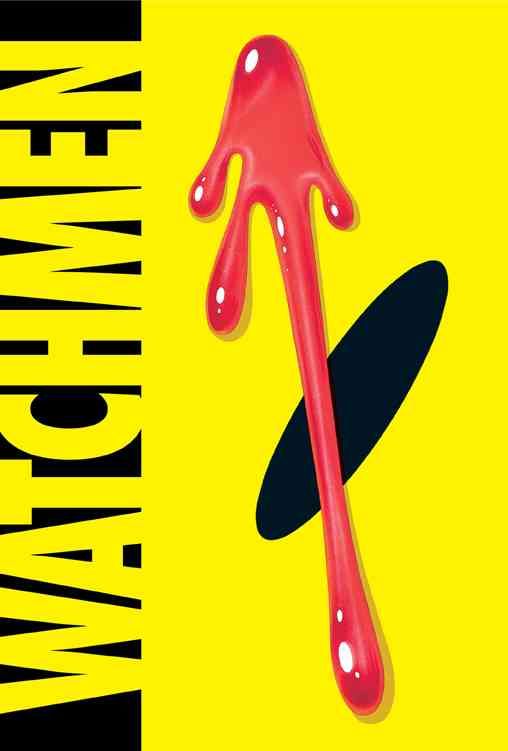
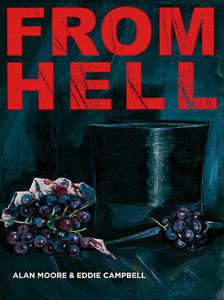
I have read and hugely enjoyed comics by both Alan Moore (eg. "Watchmen", "From Hell", "The League of Extraordinary Gentlemen") and Frank Miller (eg. "Daredevil", "Elektra", "Batman: The Dark Knight Returns", "Batman: Year One"), 


though admittedly nothing very recent in Miller's case. They were both giants in the movement that took comics from throwaway pulp to serious art in the 80s and 90s. Does that give them licence to comment on politics and public demonstrations?


Funnily enough, I think maybe it does. 


Both of them have based a great deal of their art on descriptions, criticisms and commentaries on (mostly allegorical) political and social situations (most obviously in Moore's "V for Vendetta"). 


Here's what Alan Moore has had to say in a  Guardian Books article about Frank Miller's recent, pretty strong, criticism of the "occupy" movement. I have to say, I'm totally with Moore on this - but maybe Miller's recent positions are are a bit too Fox-News-like for European consumption. Perhaps I'm just betraying my pinko European prejudices.

Saturday, 26 November 2011

Lost in the Cloud

My blog updating has been woeful of late. And I put the blame firmly at the door of OnLive cloud gaming! Instead of sharing my half-thought-through opinions on my blog, I've had my spare time sucked into Batman: Arkham Asylum...


Now, to be fair, I have been a more than willing accomplice in my own downfall. There are two factors. Firstly, Arkham Asylum is a mighty fine game for all sorts of reasons (with more than a nod to Grant Morrison's excellent graphic novel). Secondly, I am well impressed by cloud gaming as a concept and a service.

It has always been a problem with PC gaming that the games don't work on every PC. In fact, unless you have an unlimited hardware budget, or are an Alienware fanboy, the latest game, the one you really fancy, has no chance of running on your PC. So, you can fork out a couple of hundred on a new graphics card (and still find it doesn't work), or do the sensible thing and buy an Xbox 360. ...Until now. With OnLive, the game is a PC game, but you can play it on your PC (or MAC, or - they reckon, sometime soon - an iPad or Android device!). Your PC needs a reasonably tasty Internet connection, but that's it. The game runs on a machine on the cloud. OnLive get to worry about whether their graphics cards are good enough, or their processors, or RAM. It's not my problem. OnLive install the game and make sure it works - all I do is log in and play. Sweet! They also sell a "console", which amounts to a small box that plugs into your TV and does nothing but connect to the OnLive service and let you play the games. It's a lot cheaper than an Xbox or PS3, since it doesn't consist of much (no disks, no fancy graphics chips).

This really looks like the future of gaming to me. Not necessarily OnLive itself, but it's only a matter of time till MicroSoft and others (Sony? Apple? Disney? Sky?) start selling games primarily in this format. No distribution worries. No console ports. Bug fixes and revisions applied at the server end as often as the provider likes. The limitation is purely the availability of decent broadband - surely something that is going to get better and better anyway, regardless of anything else.

So there you are. I am predicting the end of the games console. Not now. Not next year - but it's coming, and we can already see what it looks like.You read it here first!


Now - it has to be said that I have been a willing accomplice in my own downfall. Not only is Arkham Asylum a fine game, but I am totally impressed by the concept and service of OnLive. The problem with PC games over the years (as opposed to the console versions), is that not all PCs will play all games. In fact, it's a reasonable rule of thumb that unless you are an Alienware fanboy with unlimited funds,

Monday, 5 September 2011

I'm too easily excited...

A new "lifeless thing" came to my attention this week. A new novel from Neal Stephenson!

Reamde

Now, I have not read this - I've not even seen a copy, so I can't, hand on heart, recommend it - but I can say that Neal's last four novels were absolutely magnificent (and his previous ones pretty fine too). They are, by and large, great monsters of books, and every page full of invention and fun. I don't re-read too many novels these days, but happily spent some weeks buried in The Baroque Cycle again last year. Isaac Newton jumping up, in a grotty tavern, in disguise, to apprehend a counterfeiter! What's not to love?

Scarily, the thing I probably like best about Anathem is that, even though it is a real feast for the brain, with plenty of genuinely interesting philosophy (natural and the other kind), and also a rip-roaring story line - It's the fact that it makes me feel pretty smart that really does it for me. Oh yes. If I'm getting all this, I must be a pretty clever guy. (I wonder if that was part of the attraction of Christopher Nolan's Inception; certainly lots of people said it was hard to follow, but they all managed it - perhaps it just seemed hard to follow).

Anyway - Reamde is right on the top of my Christmas list. Let's hope it's in paperback by then. I don't begrudge paying the hardback price, but I read my books on the train, and the Anathem hardback was a full weight training exercise on its own, when I carried it in my laptop bag to work every day.

Tuesday, 9 August 2011

Holiday Reading


Amongst this week's holiday reading, I packed a copy of The Museum of Innocence by Orhan Pamuk. I thought I should include at least one Turkish novel to to with my location. I had previously enjoyed "My Name is Red" by the same author (a clever murder mystery in which one of the narrators is the killer...without giving away his identity).

The Museum of Innocence is very different. I won't go into details or launch into a critique, there are plenty of those already available on the web, and I'm typing this on an Android touch screen by a very sunny swimming pool. I know. I suffer for my art. However, I was very taken with one particular chapter of this very fine novel.

To set the scene, our main character is a wealthy man who is completely obsessed with a girl with whom he had a brief affair. Through various twists and turns, and largely because of Turkish moral attitudes in the 1970s, he finds that the only way to even partially satisfy his obsession is to spend evenings with her family (with the girl, her parents, her new husband and a canary called Lemon). Our man spends literally thousands of evenings like this over many years (he counts them all).

Amidst this lengthy section of the book is a chapter entitled "Sometimes". The chapter is several pages long and consists entirely of short sentences beginning with the word "sometimes". It reads like a poem to banality. It lists, in no particular order, hundreds of incidents that may have occurred over the course of simple family evenings in front of a single-channel TV set. Of meals eaten, cigarettes smoked, comments made - and nestled among them all, tiny nuggets of joy or despair when the girl he loves lets slip something that might give or take his hope.

I'm still thinking about it now, days after reading it. I guess it may be better or worse on the original Turkish, but it's pretty affecting in translation.

Incidentally, since reading this novel I am now partaking of the occasional Raki. Well, I am on holiday.

Saturday, 16 July 2011

It's all gone a bit silly

Oh dear. Following my "Wagner" experiences a few weeks ago (for which Stephen Fry and BBC 4 are not without blame), my Spotify playlist has taken an increasingly operatic turn. As well as dipping back in to my old Wagner haunts, I have also been tempted into Italian opera. Now there's a thing. In my full-blown opera-loving teenage years, I tried a bit of Verdi (quite liked Aida and really liked the pyrotechnics of the huge drums in his Requiem), but no more than that. It all seemed a bit too Andrew Lloyd-Webber after Wagner. And, in those days, it even mattered to me that Wagner himself didn't think much of Joe Green.

Anyway - almost accidentally I picked up a Deutsche Gramophon Verdi sampler from a Spotify playlist, and this time, nearly 30 years on, it really hit the spot.

Verdi Highlights

It doesn't have the visceral drama of Wagner - but those tunes are big and meaty and just all-round fabulous! Co-incidentally, I chanced across La Traviata on Sky Arts, and (because the rest of the family were busy with school work) ended up watching the whole thing. (It's La Dame aux Camélias in opera form - who knew?) I'm not sure I'll ever get used to the audience applauding at the end of "numbers". You can see why Wagner looked down his considerable Teutonic nose - but how fabulous was the music?

Have I gone over to the dark side?

A few train journeys and shopping trips with Verdi on my Android - and I was ready for more. Oh yes. Puccini. A bit of Turnadot and Butterfly. I know! Where will it all lead?

Puccini Highlights

With any luck this is another phase and I'll be back to Indie guitar, or maybe Beethoven, before you know it.

Hehehe - loving it really.

Another shopping trip round Tesco today. I managed to give the opera a skip this time - and listened to Pergolesi's Stabat Mater. Mighty fine too. Maybe I should just get on and enjoy it.

I promise my next post will be Opera-free...

Tuesday, 14 June 2011

Wagner and Me (and Stephen Fry)

Watched Stephen Fry's documentary "Wagner and Me" on Sky+ this Sunday morning (while ironing...it's all go here!).


www.wagnerandme.com

Stephen Fry is a lifelong Wagner lover, and I can totally sympathise. I was that man myself through my teens and early twenties. Watching Stephen in the Holy of Holies at the Bayreuth Festival Theatre suddenly brought it all back. Somehow it's more than music - there's a deep wonder and a longing to be part of something that seems so magnificent. In one scene, Stephen joins in playing the Tristan chord on Wagner's own piano, and is clearly beside himself with joy (particularly when a real musician plays him the last few bars of the liebestod and Stephen himself tries to play the final note).

The film has two sides.

Firstly, and joyously, it is a diary of Stephen experiencing a lifelong dream come true - and his awestruck enthusiasm is infectious. All my old Wagner days came rushing back to me, I can tell you. Right now I can imagine nothing more perfect than Der Ring Des Nibelungen at Bayreuth. There's a six year waiting list for tickets, apparently, and I bet they're priced just a smidgen out of my reach.

Secondly, and the film absolutely does not shy away from this, it looks at the tainted image of Wagner and his works. Here the film becomes uncomfortable, and so does Mr. Fry. There's a potted biography of Wagner, including references to his ridiculous anti-semitic writings. Of course, there's no avoiding it - the Nazis loved Wagner, most especially Hitler. There are ironies everywhere, and it is difficult to reconcile the wonderful music with the history surrounding it.

We've always had this trouble with Wagner. Maybe we can separate the art from the artist (and can we blame Wagner, or even the music, for the fact that nasty people liked it years after it was written?). But there's more to it than that. In Nuremberg, Stephen spoke to a scholar who theorised that the Nazi Nuremberg rallies were inspired directly by scenes from Die Meistersinger von Nürnberg itself. Again, you can't blame Wagner for that, but it's all a bit uncomfortable. At one memorable point, Stephen sits on the steps leading to the podium from which Hitler surveyed his rallying storm-troopers - but, unlike the tourists in the background of the shot, he cannot bring himself to stand on that podium himself. Back at the Bayreuth Festival Theater, we see the window where Hitler famously waved to the crowd while they (all of them) returned the Heil Hitler salute.

Ultimately, Stephen visits a lady who survived Auschwitz by playing cello in the prison orchestra. She recounts a small part of the horrors and how the whims of the Nazis saved her while others were brutally destroyed. She assured us that Wagner was not played at Auschwitz, but, it turns out, she doesn't like Wagner's music in any case. When Stephen asks if she thinks he is wrong to go to Bayreuth, she suggests he should stay at home and listen to records. She clearly does not approve of telling people what they should and should not do - but there was a distinct impression that there was something distasteful about Bayreuth for her.

So, in the end, what does Stephen do?

He does what I would do. He puts on his dinner jacket, grasps his gold-dust festival ticket in his hand, and heads into the theatre for the chance of a lifetime, and no doubt some simply astonishing music. But he looks sheepish and quite uncomfortable as he mounts the steps to the theatre.

Sometimes we can't do anything about our heroes. I spent my youth desperately loving Wagner's music, and trying very hard to excuse the man himself and the more modern associations with Nazism. The fact is though, and we can see Stephen trying his hardest to be completely open minded, if you/I/he love the music, it is oh so tempting to try and see round the problems. But maybe we don't need to like Wagner the man. In fact, racist or not, he seems for all the world to have been a pretty loathsome character. He was a man totally obsessed with his own importance (maybe that's a common thing in showbiz!). His music is simply transcendent (in my opinion), but even in the art we see glimpses of the selfish git - his star cross'd lovers in Tristan und Isolde are not separated by warring, bigoted elders, like Shakespeare's love-struck kids, but are kept apart by the fact that Isolde is already married to a jolly nice man who happens to be the king. In fact, the whole thing ends up sounding like wish-fulfilment for Wagner who was, at the time, lusting after the wife of the man who bankrolled Wagner's lifestyle and artistic productions. If you spend too much time looking at the problems and controversy around the man and the use of his music (and indeed the use that was made of the Bayreuth Festival in the Nazi years), it's all too easy to just give up on it all as a bad deal.

After finishing the ironing, my Sunday then moved on to another chapter of delights, and I spent an hour in Tesco doing the family weekly shopping. I couldn't get Wagner out of my head, though - after all these years. So, sheepishly, but not in a dinner jacket, I dialled up highlights of Tristan... on Spotify and listened my way round the aisles.

I got to "...Unbewußst, höchste Lust" in the toiletries aisle at the end.

Big mistake.

It's no joke blubbing in Tesco.